role:
Interaction Designer, UX Researcher
Interaction Designer, UX Researcher
timeline:
September - December 2025
September - December 2025
team:
2 Interaction Designers, 3 UX Researchers
2 Interaction Designers, 3 UX Researchers
skills:
Product Design, Interface Design, Interaction Design, Prototyping, Usability Testing, Thematic Analysis
Product Design, Interface Design, Interaction Design, Prototyping, Usability Testing, Thematic Analysis
PROBLEM
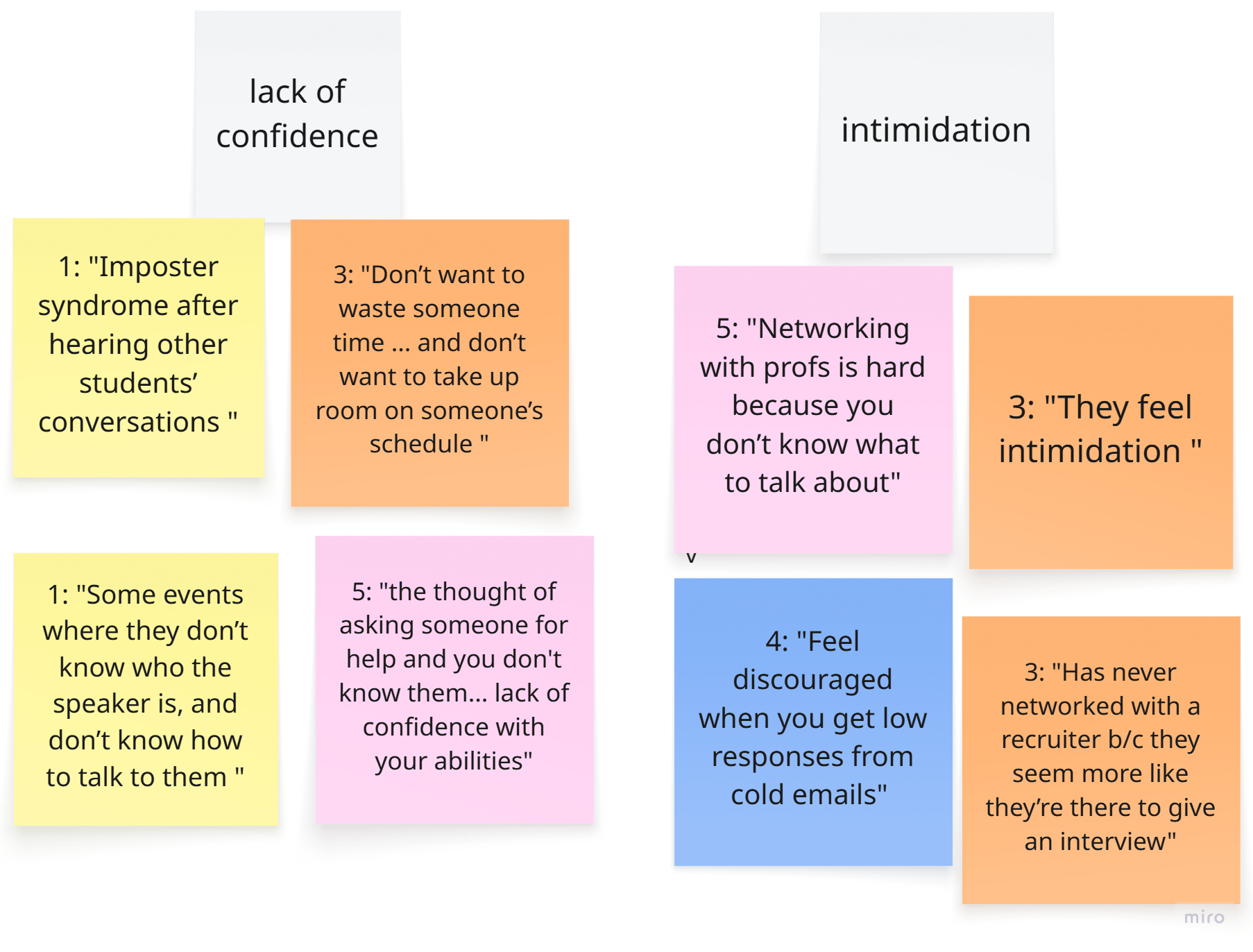
Students often struggle to initiate relationships with industry professionals and peers in their field. Through user research, we identified two primary barriers they face:
Lack of confidence due to limited practice in professional conversations.
&
Lack of access to relevant professionals and peers aligned with their field of study.
SOLUTIONS
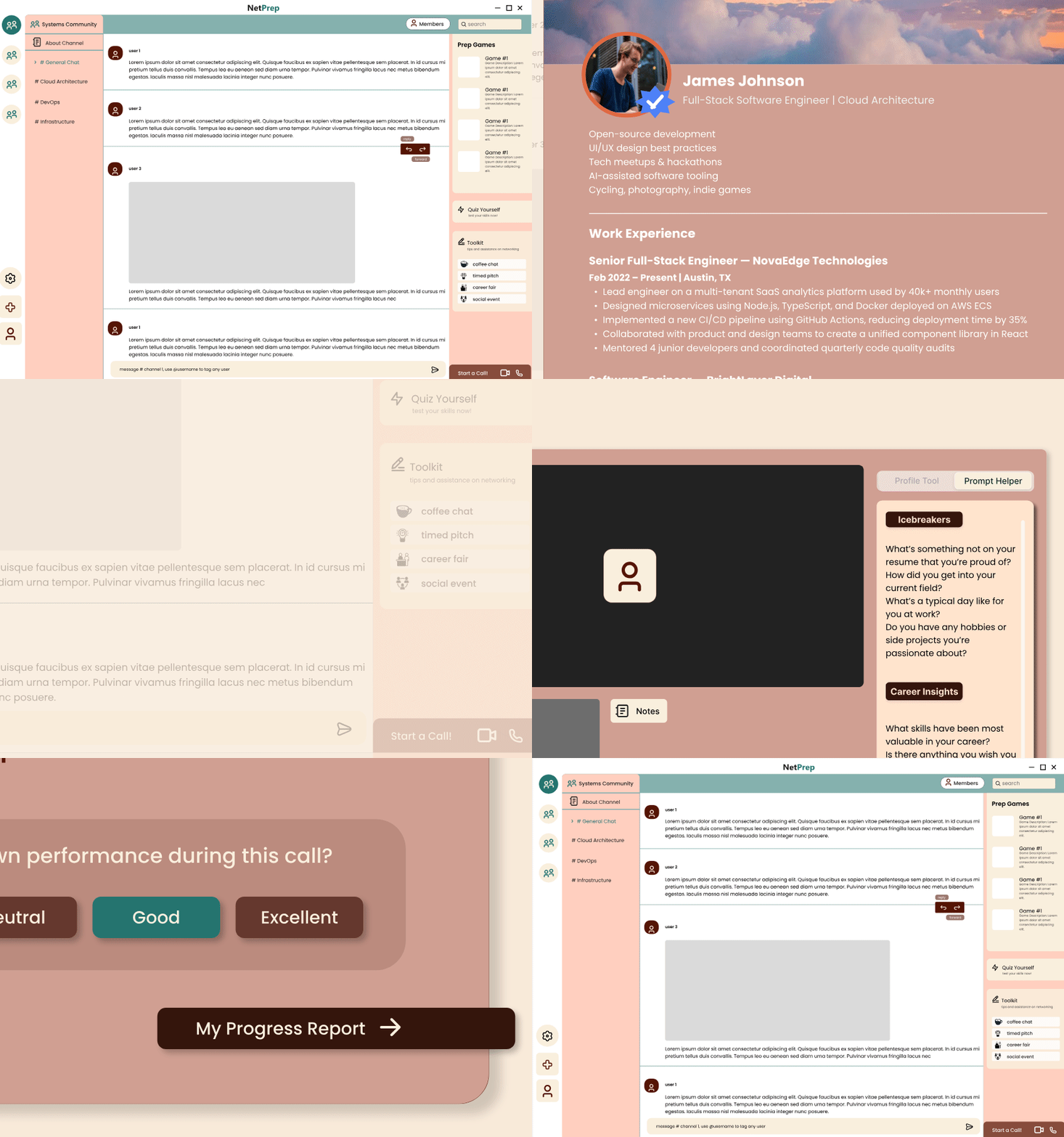
NetPrep a conversation-practice platform that acts as a structured, low-risk environment where students could build confidence by:
Discover relevant professionals and peers within specific academic or industry communities
&
Practice real-time conversations using structured prompts and in-call supportive tools, and receive feedback to track progress
CONCEPT
early design stage
dating style swipe
• Rejected: Swipe model that focuses on matching, not practice
bulleting board
• Rejected: Supports passive browsing, not real-time interaction
server-channel chat interface
• Selected: Supports matching with communities and real-time conversation practice
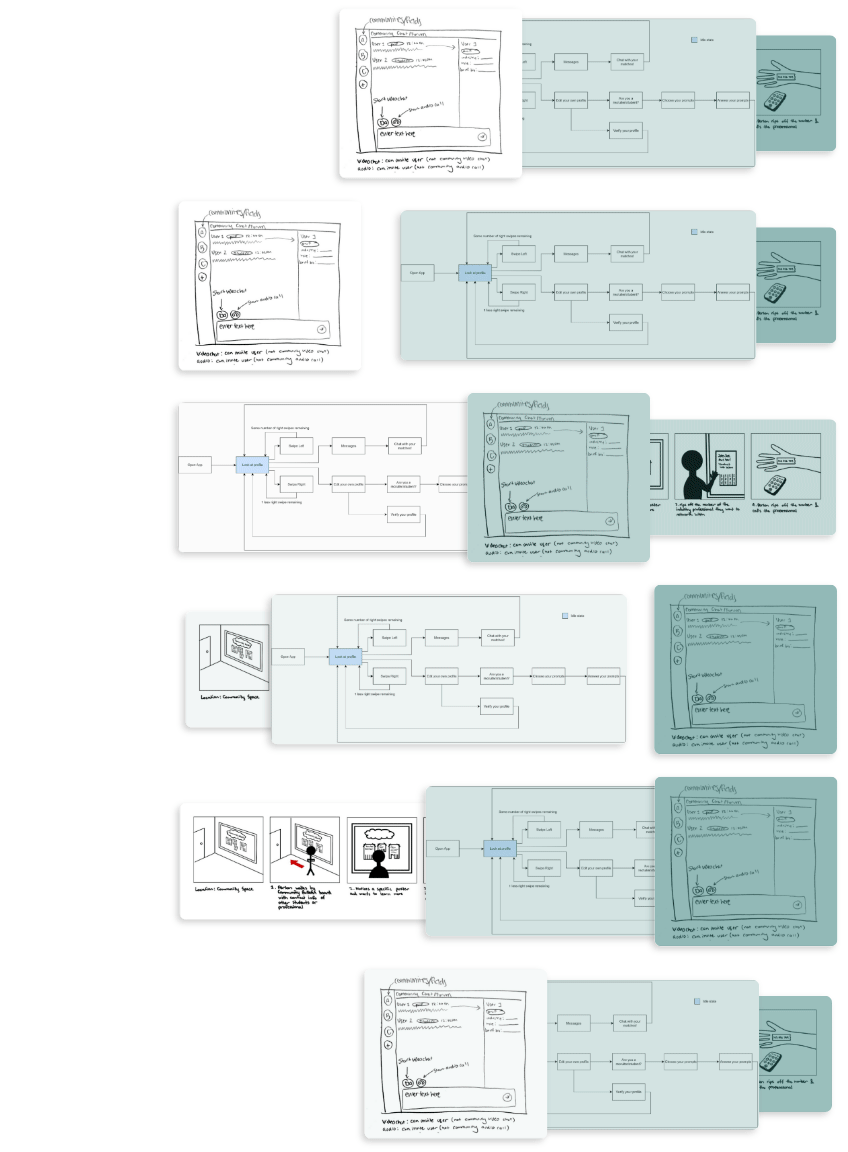
This form of the interface was heavily preferred because it felt familiar, low-pressure, and already aligned with how students communicate.
DESIGN STAGE
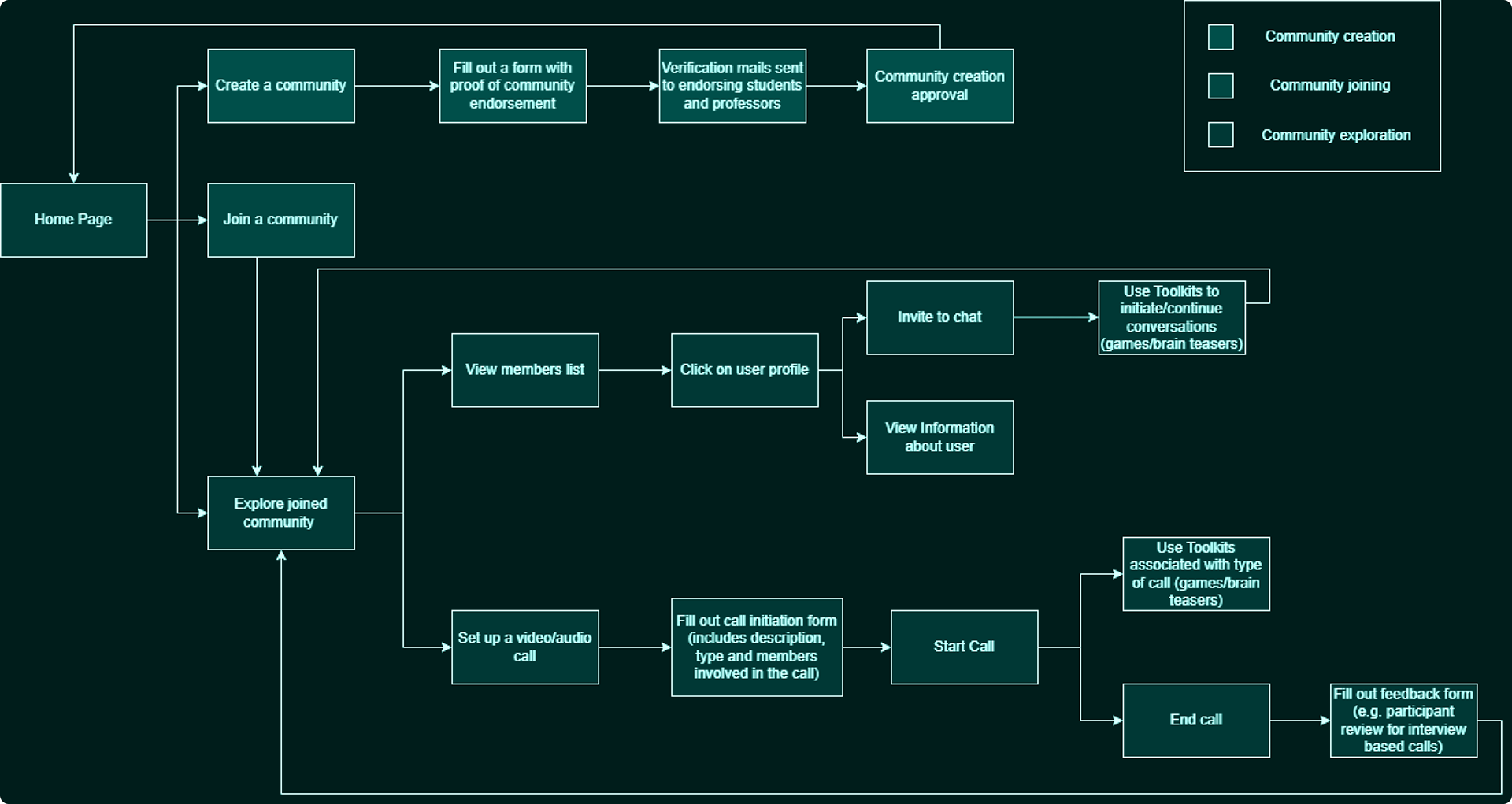
Our first iteration of the design's low-fidelity prototype revealed that we focused heavily on discovering relevant members:
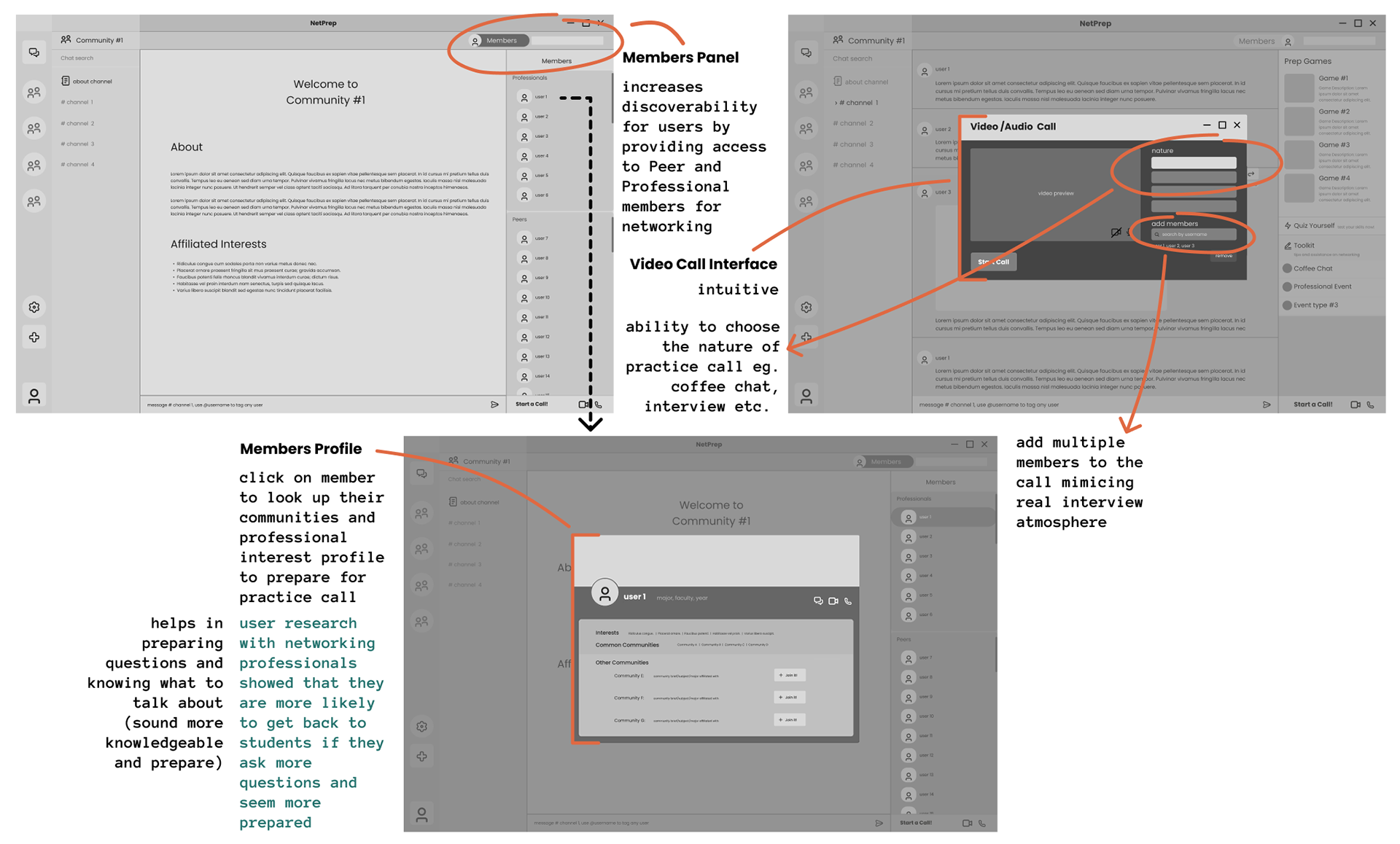
discovering users → initiating a conversation → starting a call
however, the cognitive walkthrough led some deliberate design decisions in order to improve user's confidence in networking calls:
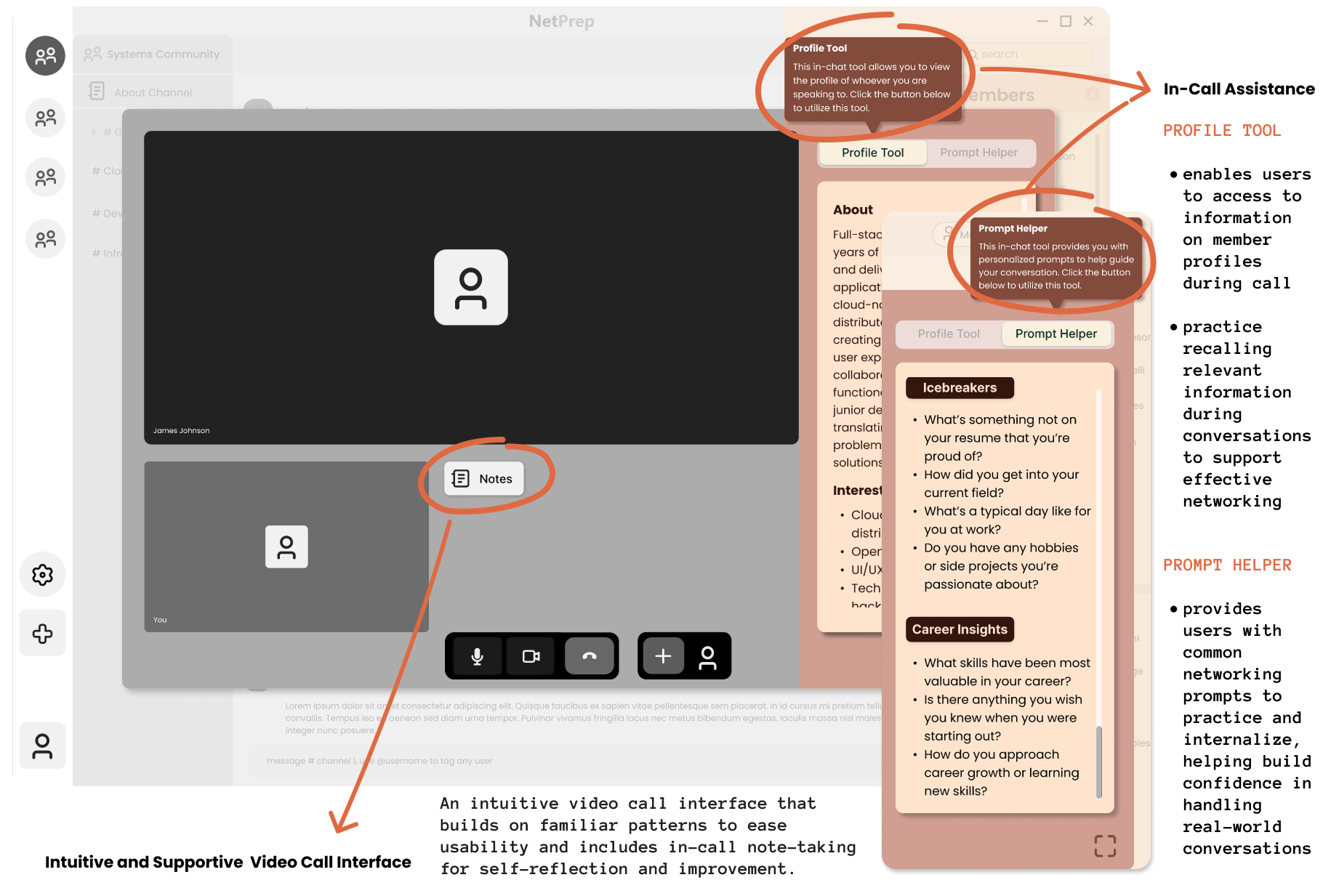
problem no guidance during conversations
evidence users hesitated before starting call as they were unprepared
solution
in-call prompt helper, notes feature and post-call feedback form to track progress
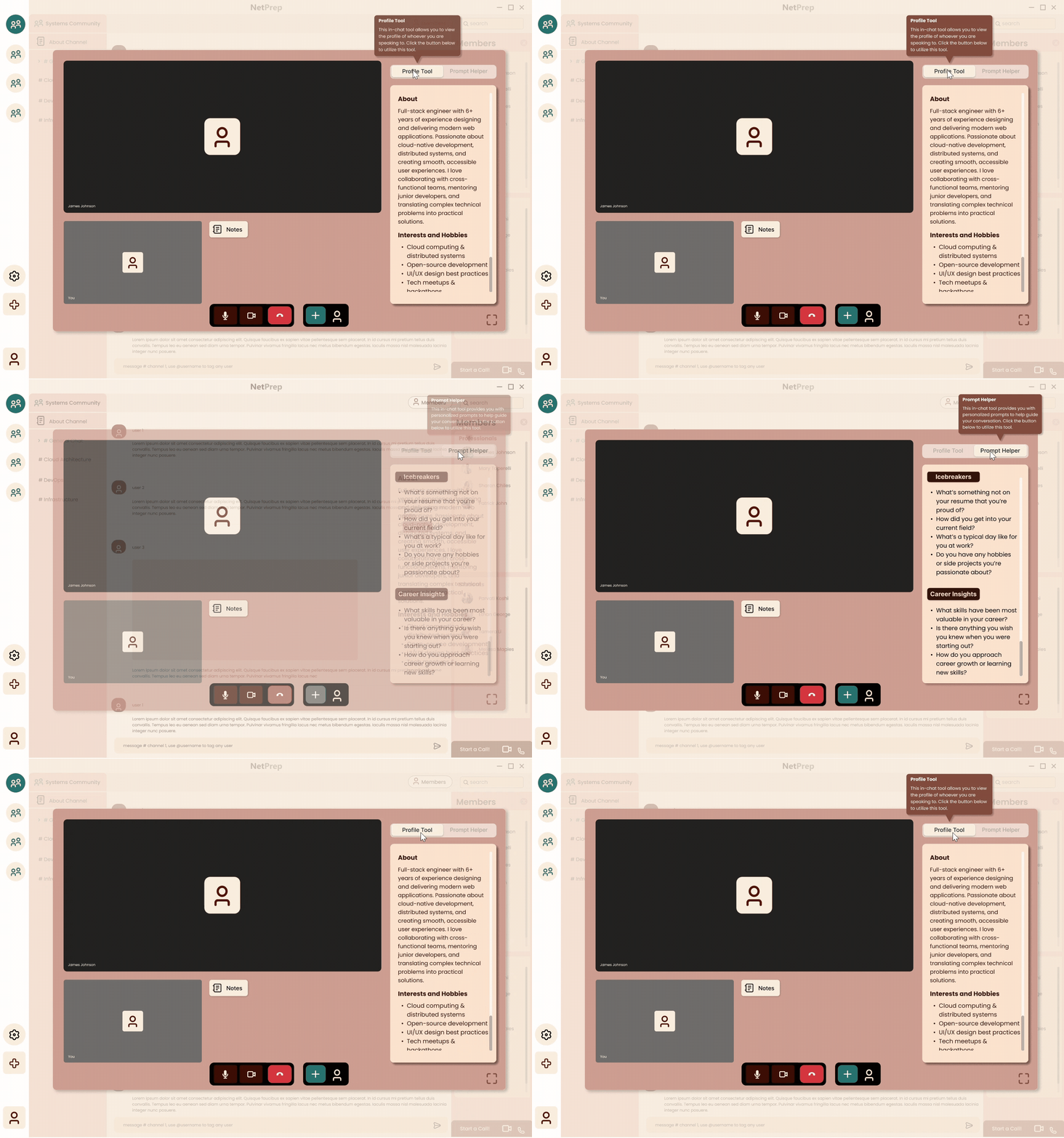
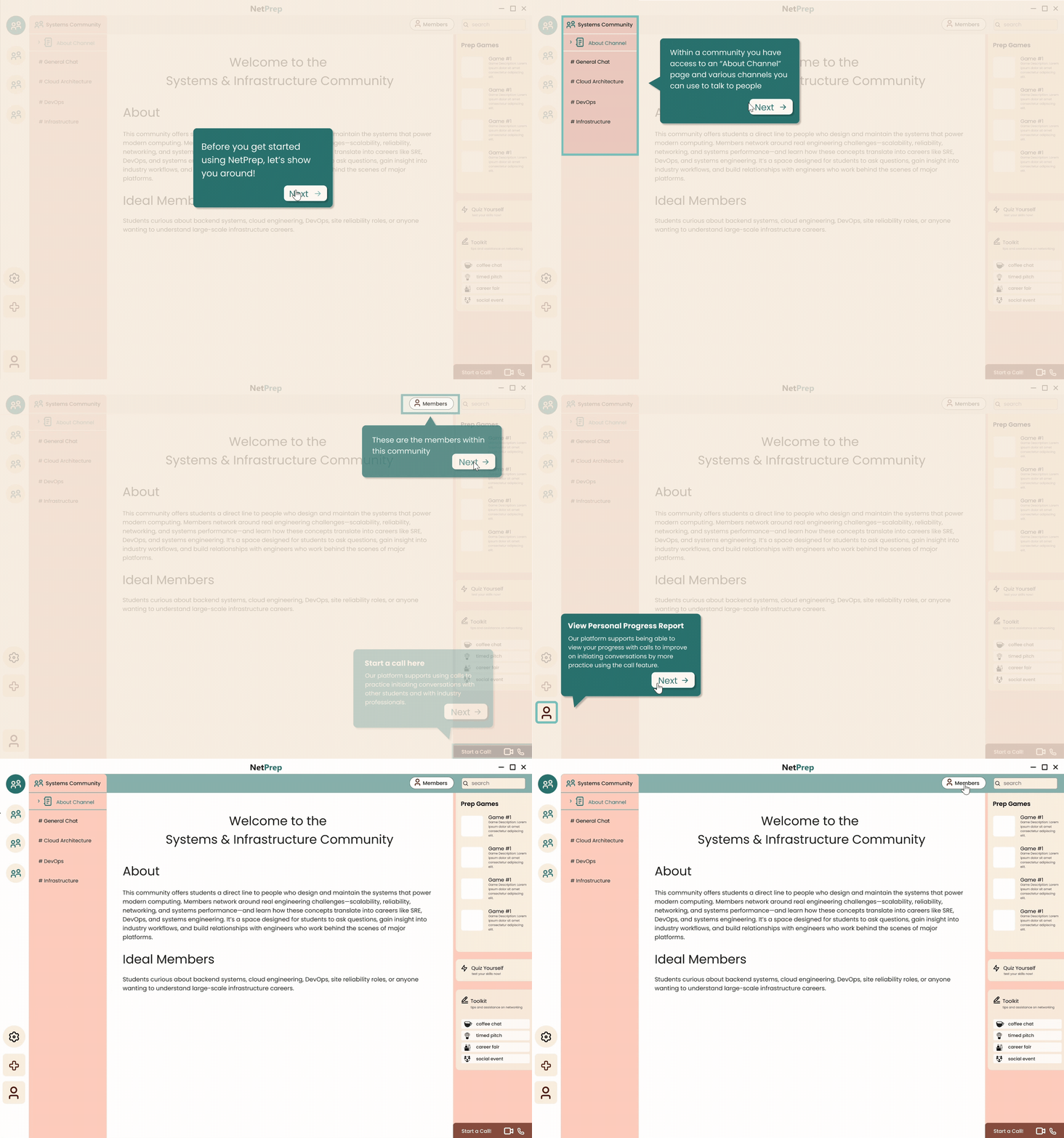
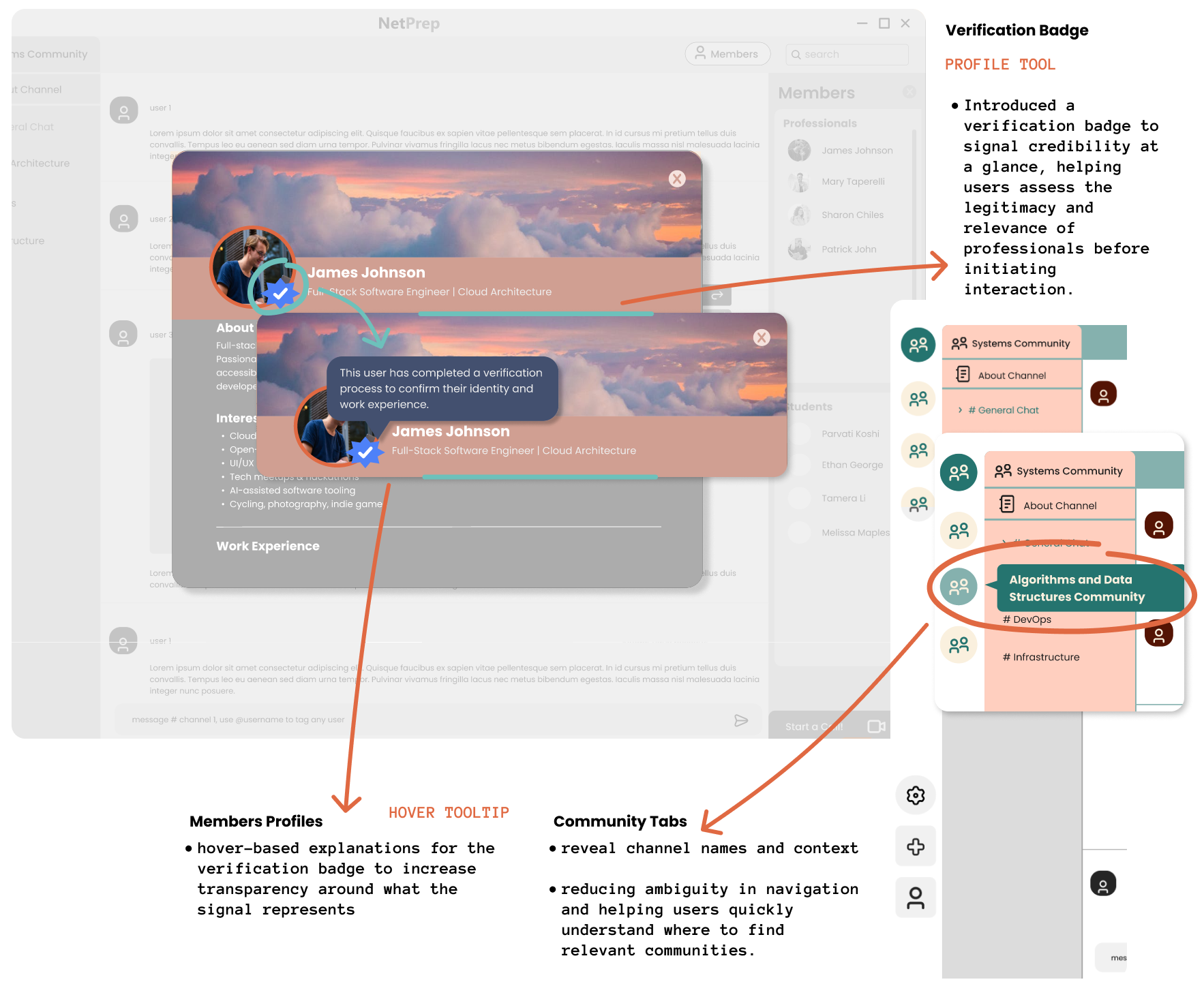
problem unclear terminology and navigation
evidence system assumed users knew what each function meant
solution
guided tutorial at the beginning and hover explanations added
USABILITY TESTS
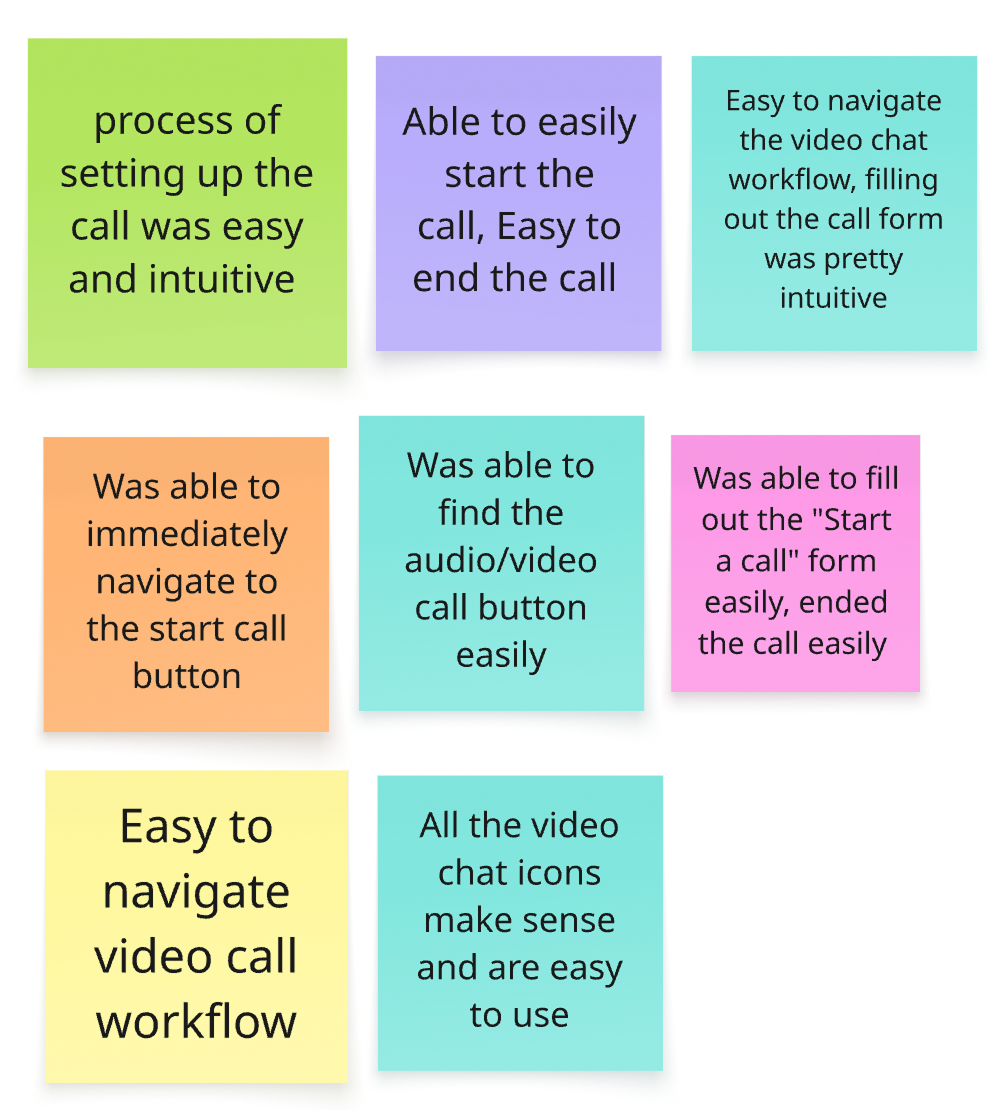
process of navigating the platform was easy
• All but one participants completed the call workflow
• 75% of participants described the interface as intuitive
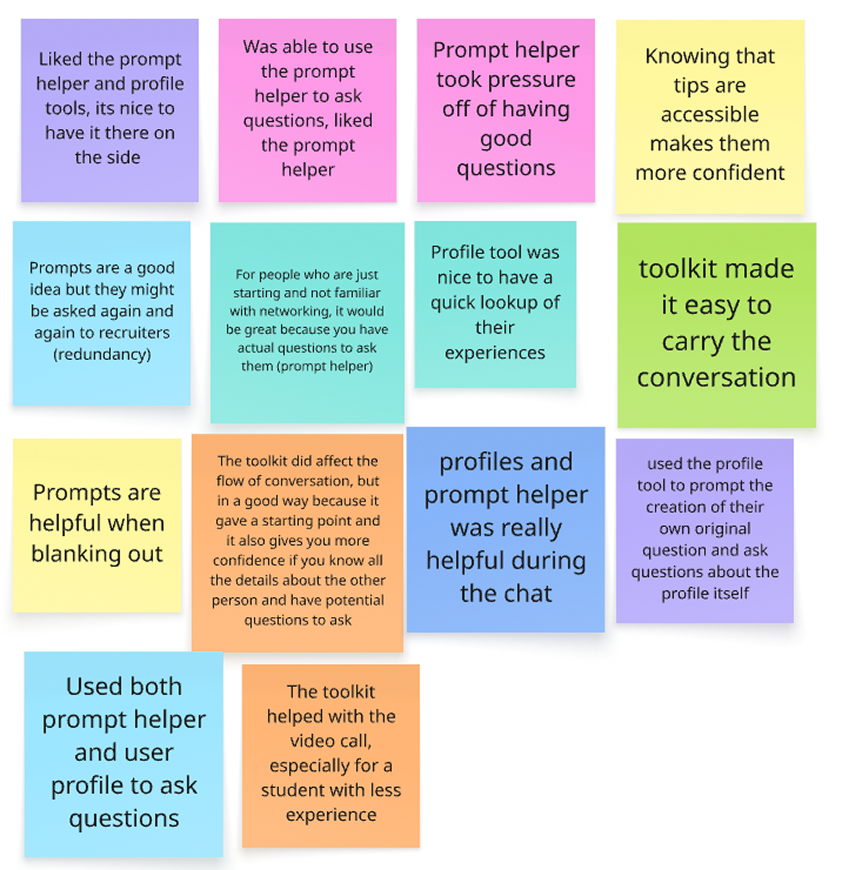
in-call assistance was found to be useful
• All participants found the prompt helper useful
• Although, 25% of users suggested getting access to the prompt helper questions in advance would prove beneficial
REFLECTION
This project reinforced the importance of aligning design decisions with users’ expectations and behaviors.
The usability testing highlighted that designing for professional preparation goes beyond functionality. Features like prompts and toolkits are more effective if they are also introduced at the right moment and in the right context for each user.
Through this process, the design evolved from a feature-focused prototype to a system centered around preparation and confidence-building.
It emphasized that in scenarios like networking, usability is not just about efficiency but also about helping users feel ready to act.